What is industrial interior design?

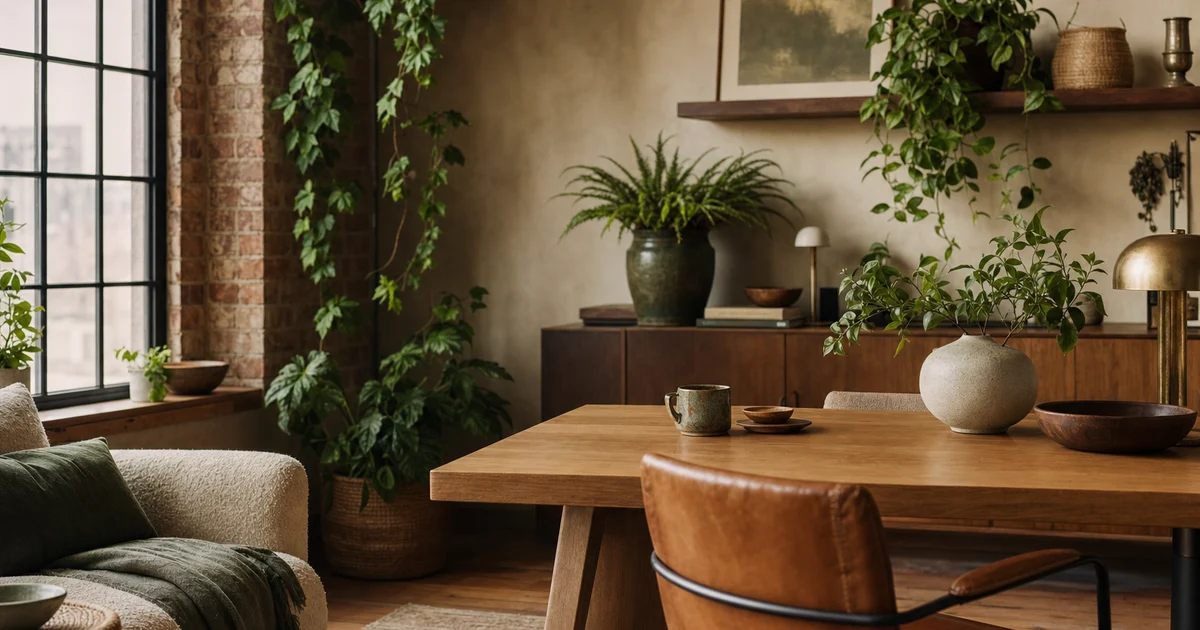
Industrial interior design takes the raw bones of a building and makes them the whole point. Instead of hiding ducts, pipes, brick, and concrete, this style leaves them exposed and treats them as the decoration. The result feels honest and open: warm wood against cold steel, soft leather against rough masonry, big windows pouring light over it all. This guide covers where the look comes from, the elements that define it, soft versus hard industrial, and how to bring it home, even in a rental, before you spend a cent on furniture.
What industrial interior design actually is
Industrial interior design celebrates the structural and mechanical parts of a building rather than concealing them. Exposed brick walls, poured concrete floors, visible steel beams, open ceiling ducts, and bare bulb lighting are not flaws to cover. They are the look.
The style was born out of necessity. In the late twentieth century, factories and warehouses in cities like New York and Chicago emptied out as manufacturing moved away. Artists and young residents moved into those big, cheap, open shells and could not afford to renovate, so they lived with what was there: brick, concrete, iron, and huge factory windows. That practical choice became an aesthetic. Today it is a deliberate decision to keep a space raw, spacious, and rooted in its warehouse and factory origins.
It pairs naturally with an open floor plan and a few functional objects. If you like the stripped-back feel but want it lighter, you may be drawn to minimalist interior design, which shares the restraint but trades raw texture for clean, quiet surfaces.
The defining elements: palette, materials, furniture, lighting, decor
Industrial rooms come together from a consistent set of ingredients. Get these right and the style reads instantly.
Color palette. Grounded and muted, built from gray, charcoal, black, brown, rust, and warm tan, anchored by the natural tones of the materials.
- Concrete gray and warm taupe for walls and floors
- The orange-red of natural brick
- Black for window frames, fixtures, and metal legs
- Tan, cognac, and saddle brown from leather and wood
- A small hit of deep green or oxblood as the only bright accent
Raw materials and finishes. Texture does the heavy lifting: exposed red brick (real or a convincing brick slip), polished or sealed concrete floors and countertops, and black steel on stair rails, shelving brackets, and window mullions. Reclaimed wood, distressed metal, and aged leather all belong.
- Exposed brick, raw or whitewashed
- Polished concrete floors, walls, or counters
- Black steel and blackened iron framing
- Reclaimed timber, scaffold boards, and butcher-block tops
Furniture. Functional and sturdy, often a wood top on a metal frame: a reclaimed-wood dining table on black steel legs, a leather Chesterfield or worn club chair, metal stools, and pipe-frame shelving. Vintage factory pieces, like a metal cart used as a coffee table, fit perfectly.
Lighting. One of the loudest signals of the style. Exposed Edison bulbs with visible filaments, black or brass metal pendants, articulated task lamps, cage fixtures, and old gooseneck factory lights all work. Hang pendants low and let the cord and socket show.
Decor. Keep accessories purposeful and utilitarian: large black-and-white photography or framed blueprints, open metal wall grids, exposed clocks, and a few real plants to break up the hard surfaces.
Soft industrial versus hard industrial
Industrial style lives on a spectrum, and knowing where you want to sit guides every choice.
Hard industrial leans fully into the warehouse. Surfaces stay raw, the palette is dominated by gray, black, and exposed brick, ceilings are open with visible ducts and conduit, and the furniture is heavy metal and dark leather. It feels dramatic, close to the original factory loft.
Soft industrial keeps the same bones but warms and lightens them. You still get the brick, concrete, and black metal, balanced with cream walls, lighter woods, woven rugs, plants, and cozy textiles. It is the version most people actually want to live in.
- Hard: dark walls, exposed concrete, heavy steel, minimal softness
- Soft: warm neutrals, more wood and textiles, raw accents used sparingly
Most homes land in the middle: one or two genuinely raw features as the anchor, softened by everything else.
How to get the industrial look, step by step
You do not need a real warehouse to pull this off. Build the look in layers.
- Start with one raw surface. Pick a single anchor: one exposed brick wall, a concrete-look floor, or a section of bare ceiling. One strong feature beats a room that is raw everywhere.
- Set a grounded palette. Warm gray or off-white walls, then black metal and brown leather. Keep bright color almost absent.
- Choose wood-and-metal furniture. Anchor the room with a reclaimed-wood table or sideboard on black steel legs, then add leather seating.
- Make the lighting a statement. Swap flush ceiling fittings for exposed Edison bulbs, black pendants, or a cage fixture. This one change does much of the work.
- Add open, utilitarian storage. Pipe-frame or black metal shelving with wood planks keeps things on show.
- Finish with restraint. A large monochrome print, a leather accent, a few plants, and you stop.
If you want more warmth and curved, mid-century shapes mixed in, look at how mid-century modern interior design blends with industrial. The two pair beautifully, with mid-century's softer silhouettes taking the edge off the raw materials.
How to warm it up so it never feels cold
The common complaint about industrial style is that it can feel hard or unwelcoming. That is a balance problem, and the fix is simple: answer every cold surface with a warm one.
- Layer in textiles. A chunky wool rug, linen curtains, throw blankets, and soft cushions instantly soften concrete and steel.
- Add more wood and leather. Warm timber tones and aged leather are the natural counterweight to brick and metal.
- Use warm-temperature bulbs. Cool white light feels clinical. Warm Edison-style bulbs make the same room inviting.
- Bring in greenery. Trailing plants and a potted tree add life and color against the neutral backdrop.
- Introduce one warm accent color. Rust, mustard, or deep green in a cushion or throw lifts the whole space.
This warmth-and-restraint balance is also the heart of contemporary interior design, so a few contemporary touches keep an industrial room feeling current rather than severe.
A rental-friendly version that changes nothing structural
You can get a convincing industrial feel without exposing a wall or pouring any concrete. Renters can lean on furniture, lighting, and textiles, all of it removable when you leave.
- Fake the surfaces, do not break them. Peel-and-stick brick or concrete-effect wallpaper on one wall reads as industrial and comes off cleanly.
- Let lighting carry the look. Plug-in Edison pendant cords, black floor lamps, and clamp task lights need no rewiring.
- Bring in the furniture. A wood-and-metal table, leather seating, and a rolling metal cart do most of the work and move with you.
- Use freestanding metal shelving. Black pipe-style or wire units give the utilitarian look with zero drilling.
- Add metal-framed art. Black frames and a few monochrome prints tie the room together.
Before you buy anything, it helps to see the change in your actual room, which is where planning the look digitally saves money and avoids returns.
Try the industrial look on your real room with MINIROOM AI
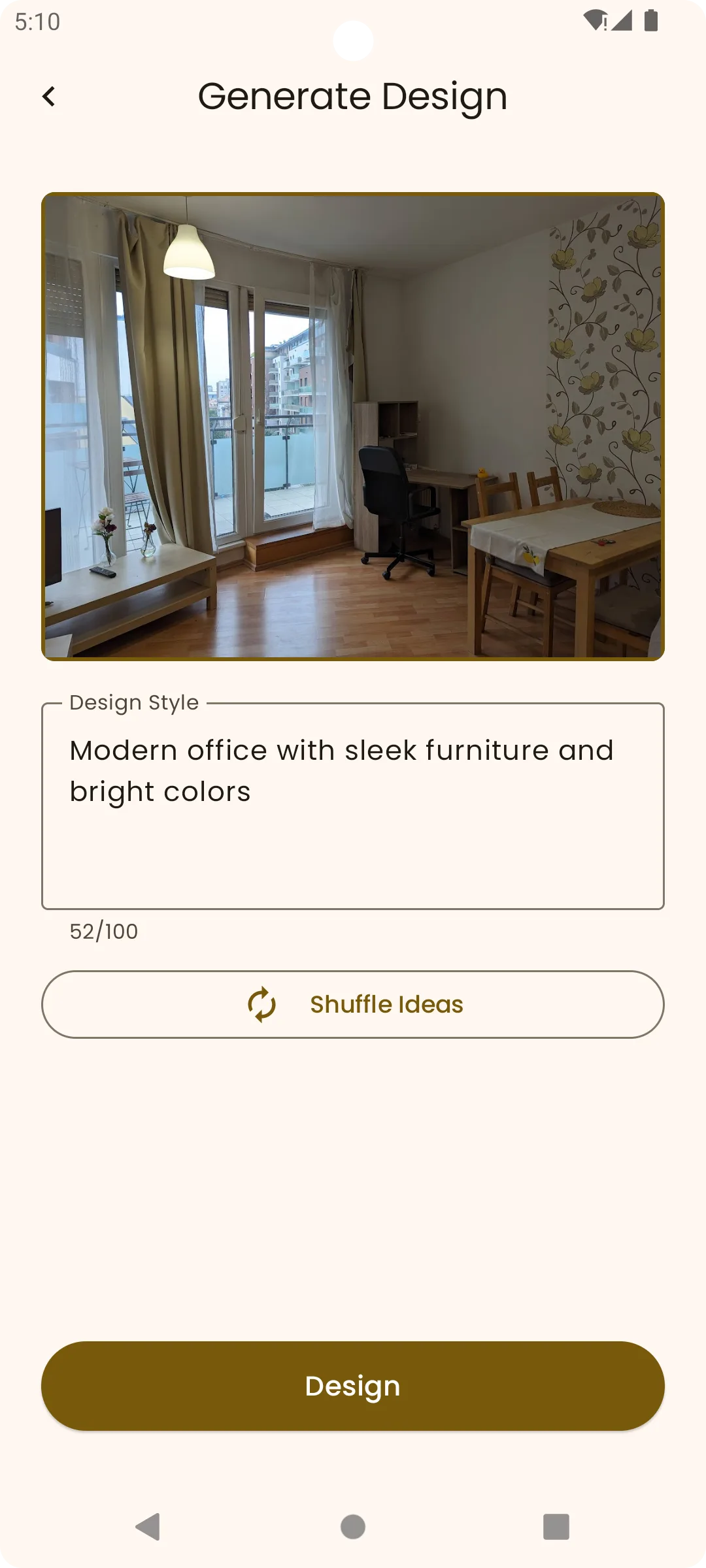
Committing to a style is hard when you are only picturing it. MINIROOM AI lets you test an industrial redesign on the room you actually live in, before you move furniture or buy a thing. The app is available on Google Play.
- Photograph the room. Open MINIROOM AI and take a clear, well-lit photo of the space, capturing as much of the walls and floor as you can.
- Choose or prompt for industrial. Pick the industrial style, or describe it: exposed brick, concrete floor, black metal shelving, Edison bulb pendants, and a reclaimed-wood table.
- Generate the redesign. The app produces an AI version of your room in the industrial style, keeping the layout recognizable so you can judge it honestly.
- Compare before and after. Put the original and the redesign side by side to see whether the raw look suits your light and proportions.
- Save and share. Save the versions you like and share them with a partner, roommate, or designer before you commit.
Trying several directions costs nothing. Generate a hard industrial version and a soft, warmed-up one and see which you respond to. The broader interior design styles hub is a good place to find your next experiment, and the AI interior design app overview shows everything the tool can do.
See an industrial version of your room.
Open MINIROOM AI on Google Play and try an industrial redesign from a real photo.

Frequently asked questions
What is industrial interior design in simple terms?
It is a style that leaves a building's raw structure on show instead of hiding it. Exposed brick, concrete, steel beams, ductwork, and bare bulb lighting become the decoration, paired with wood-and-metal furniture and a muted gray, black, and brown palette.
Where did the industrial style come from?
It grew out of disused factories and warehouses in cities like New York and Chicago. When residents moved into those empty industrial shells, they could not afford to renovate, so they lived with the brick, concrete, and iron already there. That practical choice became a deliberate look.
What colors work best for an industrial room?
Grounded, muted tones: gray, charcoal, black, brown, rust, and warm tan, plus the natural orange-red of brick and the cognac of leather. Bright color is used sparingly, usually a single accent like deep green or oxblood.
What is the difference between soft and hard industrial?
Hard industrial leans fully into the warehouse with raw concrete, dark walls, heavy steel, and minimal softness. Soft industrial keeps the brick, concrete, and black metal but balances them with warm neutrals, lighter woods, plants, and cozy textiles, so it is easier to live in.
How do I make industrial style feel warm instead of cold?
Answer every hard surface with a soft one. Add wool rugs, linen curtains, and throw cushions, layer in wood and leather, use warm-temperature Edison bulbs instead of cool white light, bring in plants, and add one warm accent color like rust or mustard.
Can I get the industrial look in a rental without renovating?
Yes. Use peel-and-stick brick or concrete-effect wallpaper, plug-in Edison pendant cords and black lamps, freestanding metal shelving, wood-and-metal furniture, and black-framed art. All of it is removable and changes nothing structural.
What lighting defines industrial design?
Exposed Edison bulbs with visible filaments, black or brass metal pendants, cage fixtures, articulated task lamps, and old gooseneck factory lights. Hanging pendants low and letting the cord and socket show is a signature move.
How can I see industrial style in my own room before buying furniture?
Use MINIROOM AI, available on Google Play. Photograph your room, choose or prompt for an industrial redesign, generate the result, then compare it with the original side by side and save the versions you like before spending any money.