What is minimalist interior design?

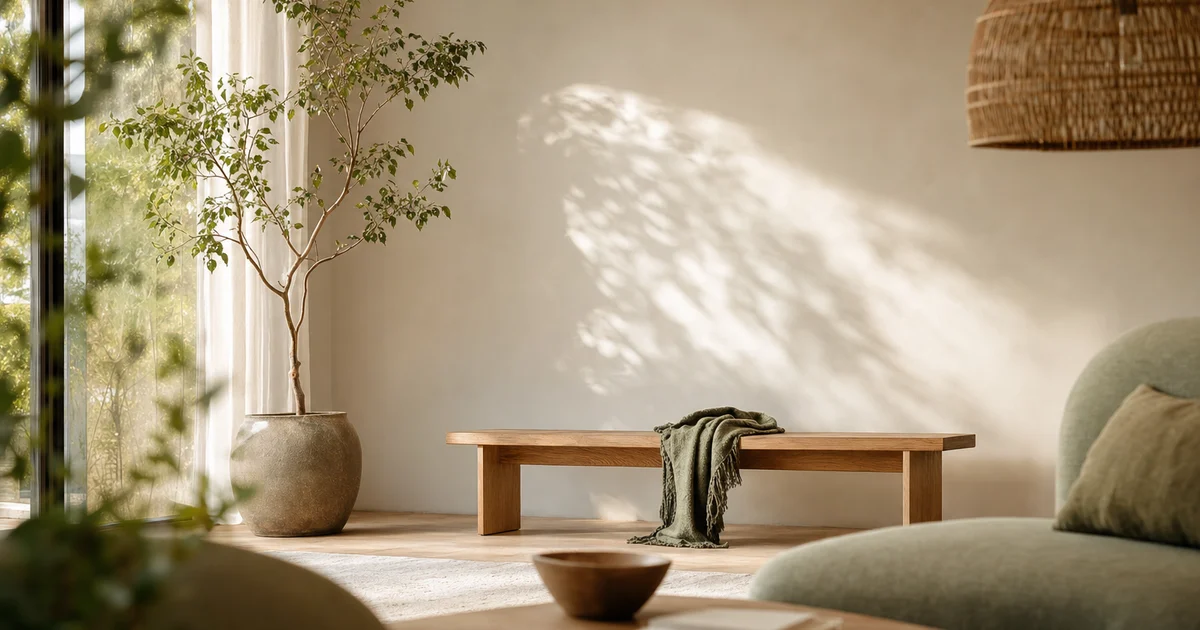
Minimalist interior design is the art of keeping only what earns its place. It is not an empty room or a cold gallery. It is a calm, edited space where every piece has a job, surfaces are clear, and the light, materials, and a few good objects do the talking. Done well, it feels restful and warm, not stark. This guide breaks down the real elements (color, space, materials, furniture, storage, lighting, texture), shows how minimalism differs from Japandi and Scandinavian design, walks you through the look on any budget, and shows how to test it on your own room before you spend a cent.
What minimalist interior design actually means
Minimalism follows one idea: less, but better. You reduce a room to its essentials so the things that remain can breathe. The goal is calm and clarity, not deprivation.
The trap is reading minimalism as empty. An empty room is just unfurnished. A minimalist room is deliberately edited: a sofa you want to sink into, a rug underfoot, art on one wall, a plant in the corner. Nothing is there by accident.
Three principles hold the style together:
- Quality over quantity. Fewer pieces, chosen well, kept for years.
- Function first. Every object does something, even if its job is simply to be beautiful.
- Negative space is a feature. The empty floor and bare wall are part of the design, not gaps.
Minimalism is one of several pared-back looks. To see how it sits next to others, the interior design styles hub lays them out side by side.
The defining elements, broken down
Minimalism is easier to get right when you treat it as a set of levers rather than a vibe. Here is what to pull.
Color palette. Build on warm neutrals so the room feels soft, not clinical: warm white (like Benjamin Moore White Dove), greige, oatmeal, putty, taupe, and soft charcoal. Keep to two or three core tones plus one quiet accent. For depth, a saturated anchor such as navy, forest green, or matte black on one wall or one piece reads as sophisticated rather than busy.
Negative space. Leave floor visible, a wall bare, the coffee table mostly clear. Empty space is what makes the few objects you keep feel intentional.
Materials. Natural materials carry the warmth: pale woods like oak and ash, warmer walnut for contrast, plus stone, marble, linen, leather, jute, and matte ceramics. Their grain adds richness, so you skip pattern or ornament.
Furniture. Choose clean lines and simple silhouettes: a low-profile sofa, a slim oak dining table, a leather lounge chair. Set pieces a little apart so each has room to be seen.
Storage. Storage is the engine of minimalism. Built-ins, closed cabinets, a sideboard, and baskets keep daily clutter out of sight so clear surfaces stay clear.
Lighting. Maximize daylight first: sheer linen panels instead of heavy drapes, mirrors to bounce light. Then layer warm, soft light (a paper pendant, a sculptural floor lamp, discreet LED strips) rather than one flat ceiling fixture.
Texture. Texture is how minimalism stays warm without color or pattern. Combine a wool throw, a boucle cushion, a linen slipcover, a jute rug, and raw wood so a neutral room feels layered and alive.
Minimalism vs Japandi and Scandinavian
These three styles share clean lines and uncluttered rooms, so they get mixed up. The differences come down to mood, palette, and philosophy.
- Pure minimalism is the most disciplined: a restrained palette, near-zero ornament, the room reduced to essentials. The risk is that it tips cold if you forget texture.
- Scandinavian is brighter and cozier. It leans on crisp whites and pale woods to make the most of low northern light, then warms up with throws, cushions, and rugs. The guiding feeling is hygge, comfort and warmth. See the Scandinavian interior design guide for the full picture.
- Japandi blends Scandinavian function with Japanese minimalism. It is more grounded and contemplative, with earthier tones, darker woods, and handmade, slightly imperfect objects, guided by wabi-sabi, the beauty in imperfection. The Japandi style guide goes deeper.
A simple way to remember it: Scandinavian is the brightest, Japandi is the warmest and most grounded, and minimalism is the most edited. For the clean look with a more current, design-led edge, the contemporary interior design guide is the next step.
How to get the look, step by step
You do not need to start over. Work through these steps in order and the room resolves itself.
- Declutter first. Clear every surface, then return only what you use or genuinely love. This does most of the work before you buy anything.
- Set the palette. Pick one warm neutral for walls, a second for large furniture, and one quiet accent. Paint sample swatches and live with them for a day or two in your own light.
- Edit the furniture. Keep the clean-lined pieces, remove the bulky or fussy ones, and pull what stays slightly off the walls so each piece can breathe.
- Solve storage. Add closed storage so daily clutter has a home. Clear surfaces only stay clear if everything has somewhere to go.
- Layer texture and light. Bring in a wool throw, a linen cushion, a jute rug, and warm layered lighting so the pared-back room feels inviting.
- Add one focal point. Finish with a single statement: one large artwork, one sculptural lamp, or one big plant. One strong piece beats five small ones.
How to keep it warm, not stark or boring
The fear with minimalism is a room that feels like a waiting room. The fix is not more stuff, it is warmer choices. Cold rooms usually come from a stark white-and-gray palette, hard surfaces, and a single overhead light. Warm it up like this:
- Choose warm neutrals over cool grays. Cream, oatmeal, and putty feel human. Stark white plus cool gray is what reads as clinical.
- Pile on texture. Boucle, wool, linen, leather, and raw wood give a neutral room depth without color or clutter.
- Bring in life. A few real plants add organic shape, soft color, and movement.
- Light in layers. Swap one ceiling light for a warm pendant, a floor lamp, and a table lamp. Layered, low light feels calm; one bright fixture feels flat.
- Let materials be the interest. A walnut grain, a marble vein, a handmade ceramic give the eye somewhere to rest in a quiet room.
Common mistakes, plus budget and rentals
A few errors trip up almost everyone trying minimalism for the first time:
- Mistaking empty for minimal. A bare, lifeless room is not the goal. Edited and warm is.
- Going all-white and all-cold. With no warm tones or texture, the room feels like a clinic.
- Buying cheap to fill space. Minimalism shows every piece, so flimsy furniture stands out. Buy fewer, better things over time.
- Skipping storage. Without somewhere to hide daily clutter, clear surfaces never last.
On a budget: minimalism is one of the cheapest styles to start, because step one, decluttering, is free and high-impact. Spend on the few pieces you see and touch most (the sofa, the bed, the dining table) and let clear space carry the rest. Second-hand solid wood often beats new particleboard for the same money.
Renting: the look relies on editing, textiles, and light rather than renovation, so it is renter-friendly. Use freestanding storage, warm plug-in lamps, and swapped soft furnishings. No drilling, and it all moves with you.
Try the look on your real room with MINIROOM AI
The hardest part of any redesign is picturing it before you commit. That is what MINIROOM AI is for. Instead of guessing whether a minimalist palette will work in your living room, you see your actual space redesigned in minutes, then decide.
Here is the flow:
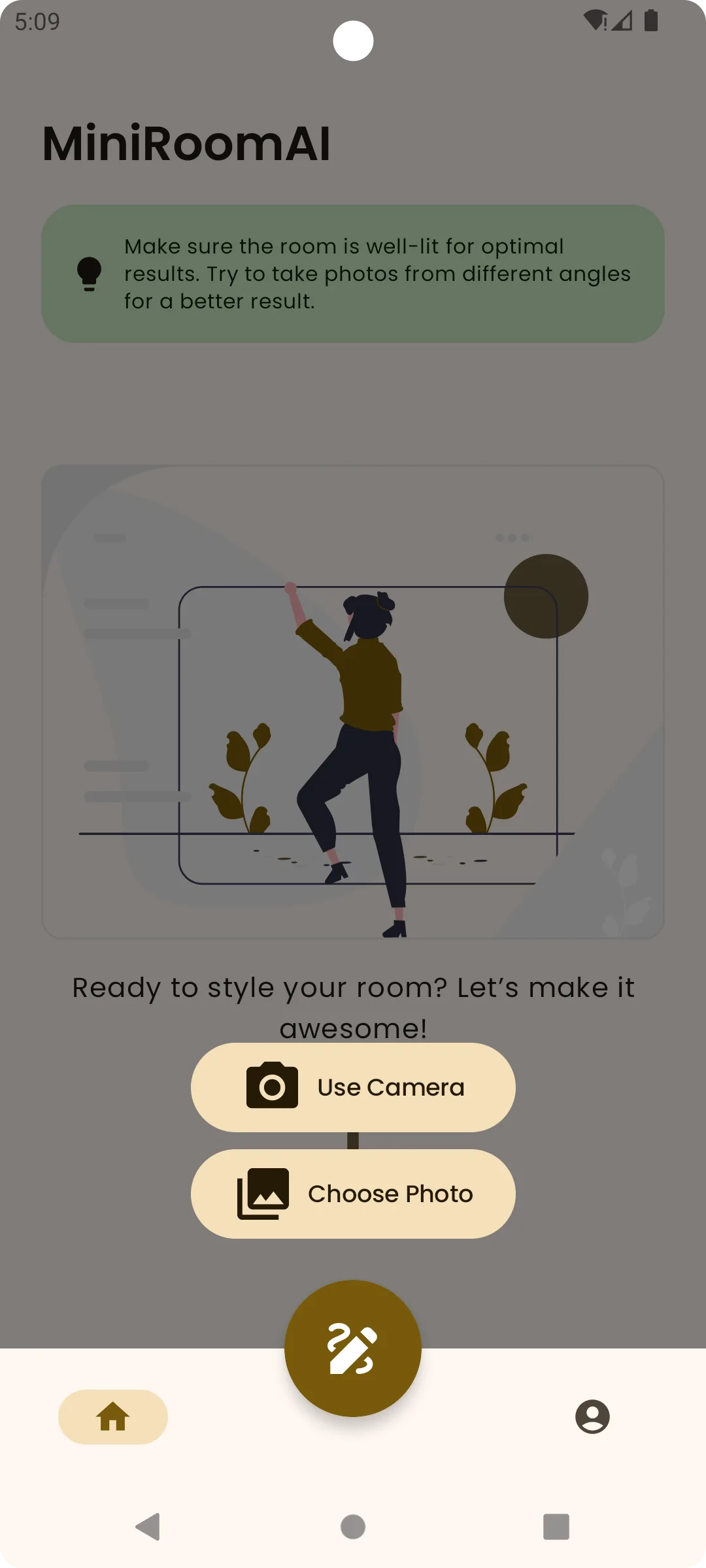
- Photograph the room. Open MINIROOM AI on Android (it is on Google Play) and take a clear, well-lit photo with the whole space in frame.
- Prompt for a minimalist redesign. Choose the minimalist style and describe what you want, for example warm neutrals, oak furniture, clear surfaces, and layered soft lighting.
- Generate. The app returns an AI redesign of your room in the minimalist look, keeping your layout recognizable.
- Compare. Put the before and after side by side to judge whether the edited, neutral version feels better in your space.
- Save and share. Keep the versions you like and share them with a partner or friend before you buy a sofa or repaint.
Trying two or three palettes (warm white, then greige, then a navy accent wall) on your real room costs nothing and removes the guesswork. Learn more on the AI interior design app page.
See a minimalist version of your room.
Open MINIROOM AI on Google Play and try a calm minimalist redesign from a photo.

Frequently asked questions
What is minimalist interior design in simple terms?
It is a style that keeps only the essentials so a room feels calm and uncluttered. Every piece has a purpose, surfaces stay clear, and warm neutrals, natural materials, and good light do the work. It is edited, not empty.
What colors are used in minimalist interiors?
Mostly warm neutrals: warm white, greige, oatmeal, putty, taupe, and soft charcoal. Keep to two or three core tones plus one quiet accent. For depth, a single saturated anchor like navy, forest green, or matte black on one wall or piece works well.
How is minimalism different from Japandi and Scandinavian design?
All three are clean and uncluttered. Scandinavian is the brightest and coziest, built on crisp whites and pale woods with hygge warmth. Japandi is the most grounded, with earthier tones, darker woods, and wabi-sabi imperfection. Pure minimalism is the most edited and disciplined of the three.
How do I make a minimalist room feel warm instead of cold?
Use warm neutrals instead of stark white and cool gray, layer texture (wool, boucle, linen, leather, raw wood), add a few real plants, and light the room in layers with warm bulbs rather than one overhead fixture. Let natural materials provide the visual interest.
What materials work best in minimalist design?
Natural materials that bring warmth and texture: pale woods like oak and ash, warmer walnut for contrast, plus stone, marble, linen, leather, jute, and matte ceramics. Their grain and texture add richness, so you do not need pattern or ornament.
Is minimalist design expensive to achieve?
Not necessarily. The first and most powerful step, decluttering, is free. Because the style shows every piece, it is better to spend on a few quality items you use most (sofa, bed, dining table) and let clear space carry the rest. Second-hand solid wood is a smart, affordable choice.
Can I do minimalist design in a rental?
Yes. The look relies on editing, textiles, and light rather than renovation, so it is very renter-friendly. Use freestanding closed storage, plug-in warm lamps, removable peel-and-stick options, and swapped soft furnishings. Nothing needs drilling and it all moves with you.
How can I preview a minimalist makeover before I buy anything?
Photograph your room with MINIROOM AI on Android (available on Google Play), pick the minimalist style, prompt for warm neutrals and clean furniture, then generate an AI redesign of your actual space. Compare the before and after, and save the versions you like before spending a cent.