Japandi style: where Japanese and Scandinavian design meet

Japandi is the calm, warm, clutter-free look that has quietly taken over interior feeds, and for good reason. It marries the soulful imperfection of Japanese design with the cozy, light-filled practicality of Scandinavian homes, giving you rooms that feel both serene and genuinely livable. This guide covers what Japandi actually is, the materials and colors that define it, how it differs from minimalist and Scandinavian, and how to get the look step by step. It is one of the more beginner-friendly directions in our roundup of interior design styles, because it forgives a little mess and rewards restraint.
What Japandi style is, and where it comes from
Japandi is a hybrid. The name fuses Japan and Scandi, and the look fuses two traditions that share a deep love of natural materials, craft, and quiet.
From Japan comes wabi-sabi, the philosophy of finding beauty in imperfection and impermanence. A hand-thrown bowl with an uneven rim, a wooden table that shows its grain and a few honest scratches, a linen curtain that creases: wabi-sabi says these are features, not flaws. From Scandinavia comes function and hygge, the Nordic instinct for warm, practical, light-filled rooms built to be lived in through long dark winters.
Put them together and you get a style that is minimal but never cold, natural but never rustic, and refined but never fussy. It became popular as an antidote to glossy, disposable interiors, and rewards a few well-made things over many cheap ones.
The defining elements of a Japandi room
Japandi is easier to get right when you break it into parts.
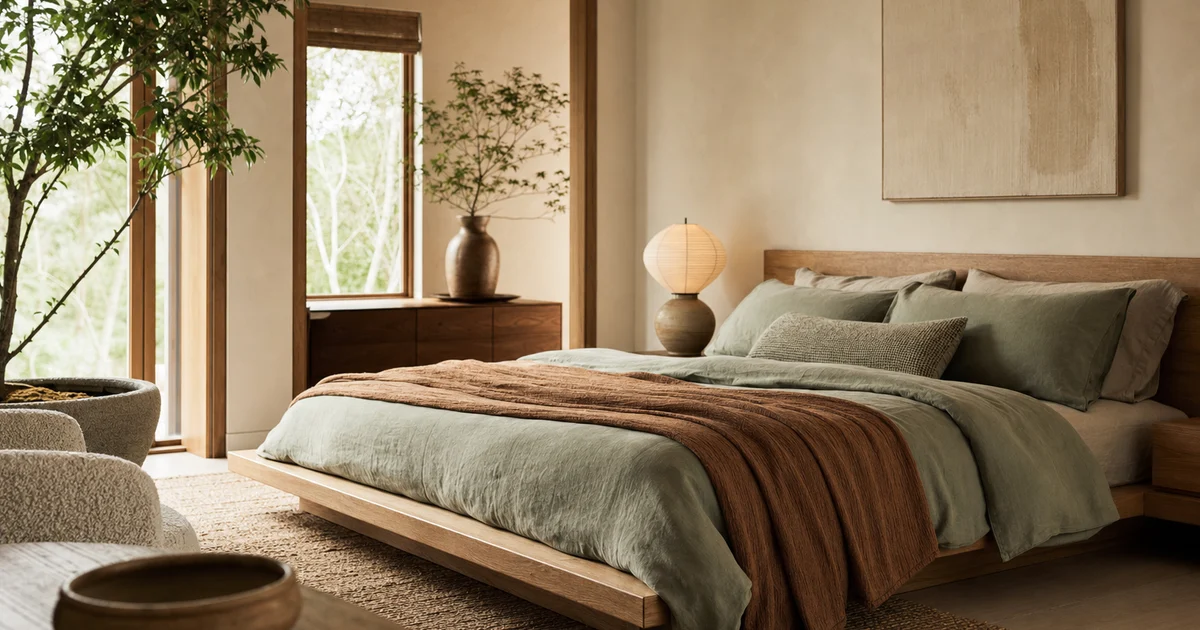
Color palette. Muted and grounded, not bright. Build a base of warm whites, oatmeal, greige, taupe, and putty, then add depth with charcoal, ink black, clay, terracotta, and muted sage. Black appears sparingly as a graphic accent, on a chair frame or a vase, never as the whole room.
Natural materials. Wood does the heavy lifting. Use light species like oak, ash, and beech for a Scandi feel, then balance them with darker, warmer woods such as walnut or stained elm for Japanese depth. Round it out with rattan, cane, bamboo, linen, wool, rice paper, stone, and unglazed clay.
Furniture, low and simple. Silhouettes sit low and stay clean: platform beds, low coffee tables, slatted benches, spindle and ladder-back chairs, and storage with flush, handle-free fronts. Nothing shouts.
Lighting. Soft, warm, and layered: paper lantern pendants, woven rattan shades, ceramic table lamps, and warm bulbs rather than one cold ceiling light. Keep windows uncovered or dressed in sheer linen.
Textiles. Natural fibers in a tight palette: washed linen bedding, chunky wool throws, a flat-weave or jute rug, and cushions in undyed or earth tones. Texture carries the interest, so skip bold patterns.
Ceramics and craft. This is where wabi-sabi shows up: hand-thrown stoneware, matte-glazed vases, a single ikebana stem, and woven baskets. Imperfect and handmade beats flawless and mass-produced.
Negative space. The empty parts of the room are doing real work. Leave surfaces clear, let furniture breathe, and resist filling every corner. Space is a design element here, not a gap.
How Japandi differs from minimalist and Scandinavian
These three styles overlap, which is why people mix them up. The differences come down to warmth, texture, and how much soul a room is allowed to show.
Pure minimalist interior design chases the absolute essential, tending toward monochrome palettes, hard edges, and a near-clinical order. Japandi keeps the restraint but adds warmth: more wood grain, soft textiles, handmade imperfection, and earthier color. A minimalist room can feel like a gallery, while a Japandi room feels like a retreat.
Scandinavian interior design shares the light woods and cozy textiles, but it leans brighter and more playful, often with pops of color, graphic patterns, and a fuller, hygge-stuffed coziness. Japandi tones the brightness down, deepens the palette with darker woods and ink accents, and brings in the Japanese discipline of negative space. Where Scandi says cozy and cheerful, Japandi says calm and grounded.
If you find pure minimalism too austere and full-on boho too busy (see our boho interior design guide for that end of the spectrum), Japandi is the comfortable middle.
How to get the Japandi look, step by step
You do not need to gut the room. Work through these steps in order and the style builds itself.
- Declutter first. Japandi starts with subtraction. Clear surfaces, edit shelves down to a few pieces, and find closed storage for the rest.
- Set the palette. Pick one warm neutral for walls (soft white, greige, or putty), then two or three muted accents such as charcoal, clay, and sage to repeat around the room.
- Anchor with wood. Pair one light wood and one darker wood for both Scandi brightness and Japanese depth. A light oak floor with a walnut table is a classic.
- Lower the furniture. Swap tall, bulky pieces for low, simple ones with clean lines and no loud hardware.
- Layer natural texture. Add linen, wool, rattan, and a jute rug, and keep patterns minimal.
- Soften the light. Use warm bulbs, add a paper or rattan pendant and a ceramic lamp, and hang sheer linen.
- Finish with craft and life. Place a few handmade ceramics, a woven basket, and one or two plants such as a bonsai, a fern, or a single branch in a stoneware vase.
Common Japandi mistakes to avoid
Most Japandi rooms go wrong in the same handful of ways.
- Treating it like cold minimalism. Stripping everything out leaves a room that feels empty rather than calm. Japandi needs wood grain, soft textiles, and a few handmade pieces to feel alive.
- Over-decorating. The opposite trap. Crowding shelves and surfaces kills the negative space that makes the style work. When in doubt, remove one more thing.
- Using only one wood tone. A single flat tone reads as flat-pack. The tension between a light wood and a darker wood is what gives Japandi its depth.
- Reaching for bright or glossy colors. Saturated brights and shiny finishes break the muted, matte mood. Keep colors earthy and surfaces low-sheen.
- Buying matchy mass-produced sets. Identical, perfect pieces work against the wabi-sabi spirit. Mix in something handmade or slightly irregular.
- Forgetting the lighting. One cold overhead fixture undoes everything. Layer warm, soft light at different heights.
Japandi on a budget and in a rental
Japandi is one of the kinder styles for tight budgets and rentals, because its whole logic is fewer, better, and natural.
On a budget, spend on the pieces you touch most and save everywhere else.
- Shop secondhand for solid-wood tables, slatted chairs, and stoneware, where older pieces often beat new ones on quality and character.
- Lean on inexpensive natural texture: a jute rug, linen-look cushion covers, a woven basket, and a simple rattan pendant shade.
- Buy a few real handmade ceramics from a local maker rather than many cheap decorative objects, and let decluttering do the rest of the work for free.
In a rental, stick to changes you can reverse.
- Swap lampshades and add warm bulbs and floor or table lamps instead of touching the ceiling fixture.
- Use freestanding low furniture and a large rug to reset the floor tone over carpet or dated tile.
- Hang sheer linen on a tension rod, use removable hooks for a piece of calm wall art, and bring in plants and natural textiles, none of which leave a mark.
See Japandi in your own room with MINIROOM AI
Reading about a style is one thing. Seeing it in your actual living room, with your windows and your proportions, is what makes the decision easy. That is what MINIROOM AI is built for, and it is free to start on Google Play.
The flow is simple:
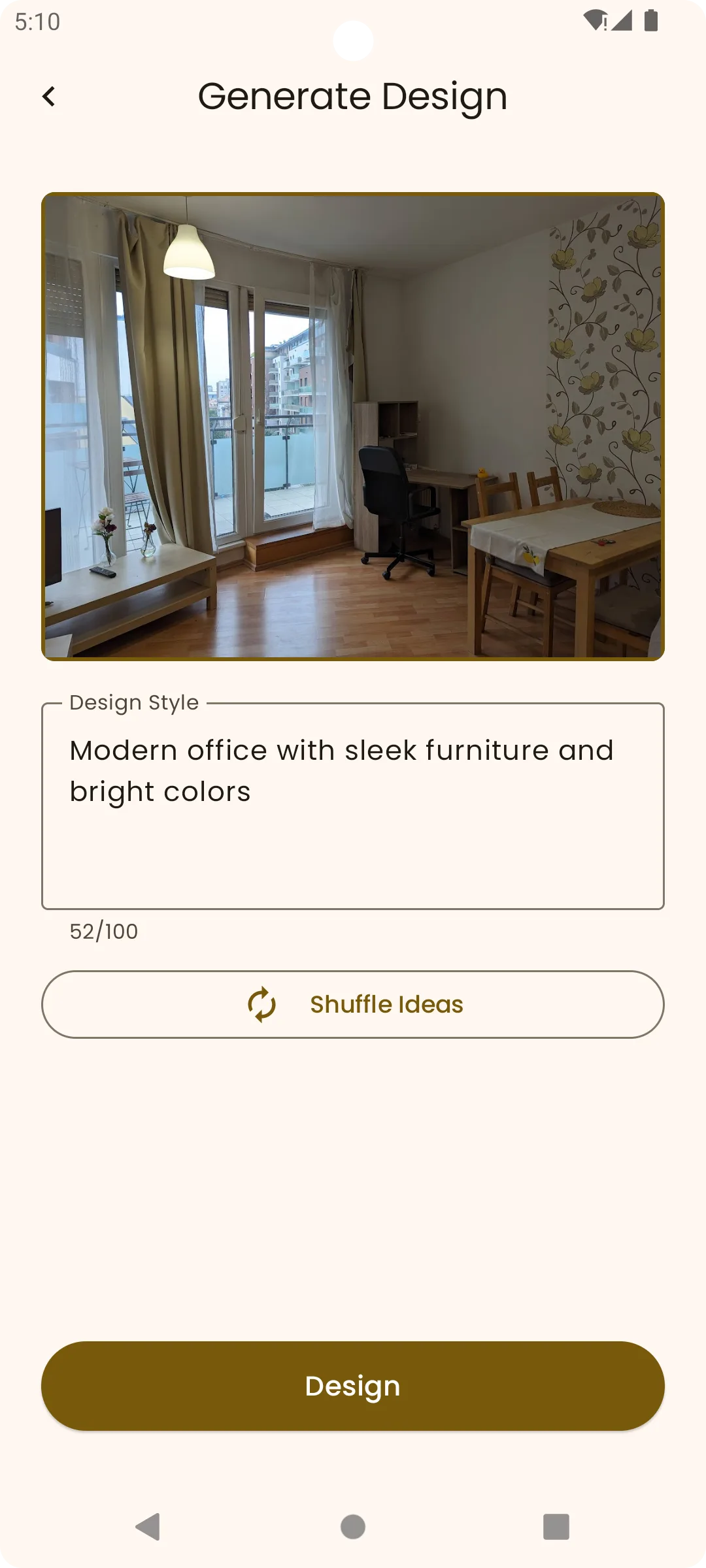
- Photograph the room. Open MINIROOM AI on your Android phone and take a clear, well-lit photo. A straight-on shot that captures the floor, walls, and main furniture works best.
- Prompt for a Japandi redesign. Choose the Japandi style, or describe it in your own words, for example a Japandi living room with light oak, a walnut coffee table, warm white walls, sage accents, low furniture, and a paper lantern.
- Generate. The app redesigns your room in seconds, keeping the layout recognizable while reimagining the palette, materials, furniture, and lighting.
- Compare side by side. Look at the before and after together, then generate variations to test a lighter Scandi-leaning version against a darker, moodier one.
- Save and share. Keep the versions you like, and share a favorite with whoever you are planning the room with.
The payoff is confidence. Instead of guessing whether walnut will feel too heavy or whether sage suits your light, you see it first, then shop for the real furniture knowing the look already works.
See a Japandi version of your room.
Open MINIROOM AI on Google Play and try a calm Japandi redesign from a real photo.

Frequently asked questions
What is Japandi style in simple terms?
Japandi is a blend of Japanese and Scandinavian design. It combines Japanese wabi-sabi, the love of natural, handmade, slightly imperfect things, with Scandinavian function and coziness. The result is a calm, warm, clutter-free room built around natural materials, muted earthy colors, low simple furniture, and plenty of empty space.
What colors are used in Japandi design?
Japandi uses a muted, grounded palette. The base is warm whites, oatmeal, greige, taupe, and putty, with deeper accents in charcoal, ink black, clay, terracotta, and soft sage or olive green. Colors stay earthy and low-sheen, and black is used sparingly as a graphic accent rather than across a whole room.
How is Japandi different from minimalism?
Both value restraint and clear space, but minimalism can feel cold and clinical, often monochrome with hard edges and almost no decoration. Japandi keeps the restraint and adds warmth through wood grain, soft natural textiles, earthier colors, and a few handmade, imperfect pieces. A minimalist room can feel like a gallery, while a Japandi room feels like a retreat.
How is Japandi different from Scandinavian style?
They share light woods and cozy textiles, but Scandinavian style is brighter and more playful, with pops of color, graphic patterns, and fuller styling. Japandi tones the brightness down, deepens the palette with darker woods and ink-black accents, and leans on the Japanese discipline of negative space, so it reads as calm and grounded rather than cheerful and busy.
What furniture works best for a Japandi room?
Low, simple pieces with clean lines and no loud hardware. Think low platform beds, low coffee tables, slatted benches, spindle or ladder-back chairs, and handle-free storage. Pair a light wood such as oak or ash with a darker wood such as walnut so the room has both Scandinavian brightness and Japanese depth, and give every piece room to breathe.
Can I do Japandi style on a budget or in a rental?
Yes. Japandi is built on fewer, better, natural things, so you buy less. On a budget, shop secondhand solid wood, add inexpensive texture like a jute rug and linen cushions, and buy a few real handmade ceramics. In a rental, swap lampshades and bulbs, use freestanding low furniture and large rugs, hang sheer linen on tension rods, and add plants, all of which are fully reversible.
What are the most common Japandi mistakes?
The two biggest are treating it like cold minimalism, which leaves a room feeling empty instead of calm, and over-decorating, which kills the negative space the style depends on. Other common errors are using only one wood tone, reaching for bright or glossy colors, buying matchy mass-produced sets, and relying on a single cold overhead light instead of layered warm lighting.
How can I see what Japandi would look like in my room?
Use MINIROOM AI, free to start on Google Play. Photograph your room, choose or describe a Japandi redesign, and the app generates a version of your actual space in the style. You can compare the before and after side by side, try lighter or darker variations, and save and share the ones you like before buying any furniture.