What is mid-century modern interior design?

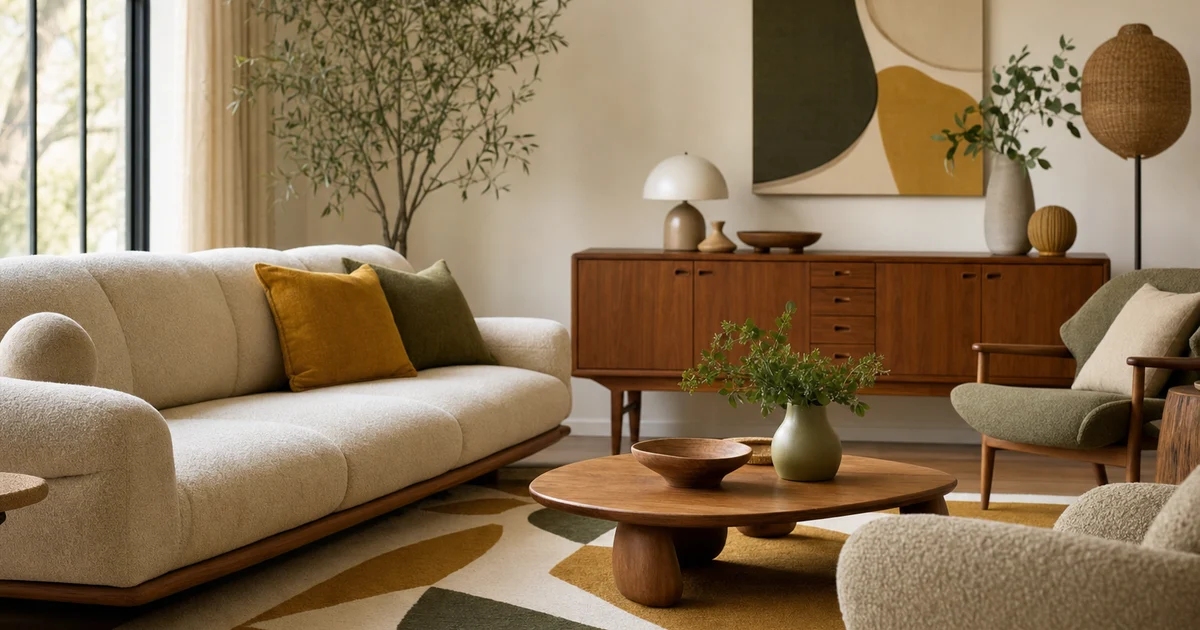
Mid-century modern is the look people keep returning to: warm wood, clean lines, and furniture that sits low and easy in a room. It grew out of the years after World War II, roughly the 1940s through the 1960s, when designers wanted homes that felt open, optimistic, and built for everyday living rather than for show, and it still works in a small rental or a big open-plan house. This guide covers the style, the woods, colors, and shapes that define it, how to get the look without it feeling like a film set, and how to test it on your own room with MINIROOM AI before you buy anything.
What mid-century modern actually is
Mid-century modern (often shortened to MCM) is a design movement that ran from about 1945 to the late 1960s. It pulled the clean geometry of the earlier Bauhaus school together with new postwar materials and a relaxed, family-friendly spirit. Designers like Charles and Ray Eames, George Nelson, and Eero Saarinen wanted furniture that was honest about how it was made and comfortable to live with.
A few ideas sit at the heart of it:
- Function comes first. Every piece has a clear job, and decoration never gets in the way of using it.
- Honest materials. Wood looks like wood and metal looks like metal, with nothing pretending to be something else.
- Connection to the outdoors. Big windows, low profiles, and an easy flow from room to room.
- Organic plus geometric. Crisp straight lines softened by curved shapes drawn from nature.
To see where it sits among other looks, our guide to interior design styles lays out how MCM relates to its neighbors so you can tell what you are drawn to.
The defining elements, broken down
Mid-century modern is specific. Once you know the building blocks, you spot it everywhere.
Color palette. The base is warm and grounded: cream, oatmeal, soft white, and natural wood tone. Against that calm backdrop, MCM leans on confident accents from the era:
- Mustard yellow and burnt orange
- Avocado and olive green
- Teal and dusty, muted blue
- Rust, terracotta, and warm browns, with the odd hit of charcoal to sharpen the edges
Woods and materials. Wood is the soul of the style, and the species matters. Teak is the classic, prized for its warm honey color and durability, while walnut brings a deeper richness and oak and rosewood appear often too. Around the wood sit molded plywood bent into smooth curves, tan and cognac leather, textured tweed, boucle, and wool, brass and chrome on legs and frames, and glass or Lucite for lighter pieces.
Furniture. The most recognizable part. MCM furniture sits low on tapered legs that often splay outward, and shapes mix the geometric and the organic, a boxy sofa beside a kidney-shaped coffee table. Look for:
- Low, streamlined sofas with thin arms and exposed wooden legs
- Sideboards and credenzas on hairpin or peg legs
- Sculptural lounge chairs with organic curves
- Round or oval tables on a single pedestal or splayed legs
Lighting. Lighting is treated as sculpture. The Sputnik chandelier, its arms radiating out like an atom, is the signature piece, alongside globe pendants, arc floor lamps that sweep over a sofa, and mushroom-shaped table lamps in ceramic or opal glass.
Patterns and layout. Pattern stays graphic and restrained: bold geometric prints, abstract shapes, the odd starburst. The layout favors negative space, so furniture floats a little off the walls and one statement piece does more than a crowded room ever could.
Mid-century modern versus contemporary
People mix these two up because they share clean lines. The key difference: mid-century modern is a fixed historical style with a defined vocabulary, while contemporary means "of right now" and keeps shifting.
- Era. MCM is anchored to 1945 to the late 1960s; contemporary tracks current trends and changes every few years.
- Warmth. MCM is warm by default, built on honey and walnut wood and rich accents; contemporary runs cooler, with more white, gray, glass, and metal.
- Shapes. MCM blends organic curves with geometry and loves tapered legs; contemporary favors straighter, more minimal silhouettes.
If the cooler, more current direction is calling instead, read our contemporary interior design guide. And if you love the warmth of MCM but want something lighter and more pared back, the closely related Nordic approach in our Scandinavian interior design guide is the natural next stop.
How to get the look, step by step
You do not need to redo a whole room at once. Build the look in layers and it stays balanced:
- Start with a wood anchor. One strong piece sets the tone, usually a teak or walnut credenza, sideboard, or dining table. Everything builds around it.
- Add a hero seat. One sculptural lounge chair or a low, clean-lined sofa on tapered legs.
- Set your palette. Warm neutral walls, then one or two accents like mustard, teal, or burnt orange, spread across a rug, a cushion, and art.
- Hang sculptural light. A Sputnik chandelier, globe pendant, or arc floor lamp signals the era.
- Layer texture. A wool or boucle throw, a leather chair, and a low-pile geometric rug keep the space from feeling flat.
- Edit the layout. Float the furniture and leave breathing room; negative space is part of the style.
- Finish with a few honest accents. A ceramic vase, a starburst clock, a plant in a simple pot, and stop there.
How to avoid a theme-park or dated feel
The risk with any strong period style is that it tips into costume. A room should feel like the era inspired it, not like a museum diorama. A few rules keep it fresh:
- Mix eras on purpose. Pair MCM pieces with something modern and something older, so each one feels chosen rather than bought as a matching set.
- Do not over-theme. Skip the wall-to-wall starbursts and boomerang prints; one or two period motifs land better than ten.
- Let neutrals carry the room. Use the bold colors as punctuation, not the whole sentence.
- Update the materials. A modern boucle or current rug under vintage chairs keeps it from reading like a time capsule.
- Make it livable. MCM was built for everyday life, so add real comfort and storage.
The same trick works across strong styles. If you like raw, harder-edged materials, the brick, steel, and exposed structure in our industrial interior design guide pair surprisingly well with MCM wood and curves.
The budget and rental angle
Authentic mid-century pieces can get expensive, but the look is achievable on a smaller budget, and most of it works in a rental because it leans on furniture rather than construction.
Where to find affordable pieces:
- Secondhand marketplaces. Online classifieds and resale apps are full of real teak and walnut. Search teak credenza, mid-century sideboard, or tapered-leg sofa.
- Thrift stores, estate sales, and flea markets. The classic hunting grounds for solid-wood finds at low prices, with vintage shops a pricier but better-curated option for a hero piece.
- Reproductions. Many retailers sell MCM-inspired furniture new, an easy way to get the silhouette.
- Small swaps. Replacing generic legs with tapered or hairpin ones, or restaining a piece a warmer tone, gets you most of the way.
For renters: lean a large geometric artwork instead of drilling holes, define a zone with a warm low-pile rug, use a plug-in arc or table lamp rather than rewiring, and add a freestanding wood credenza for storage and that anchor-piece look.
Try mid-century modern on your real room with MINIROOM AI
Reading about a style is one thing. Seeing it in your actual room, with your light and proportions, is what tells you whether it will work. That is what MINIROOM AI is built for, and it takes a couple of minutes.
- Photograph the room. Open MINIROOM AI on your Android phone and take a clear, well-lit photo, standing back so the camera captures the whole room.
- Prompt for the look. Choose the mid-century modern style and describe what you want in plain words, for example "warm walnut credenza, low tan leather sofa, mustard accents, Sputnik light, open space."
- Generate the redesign. The app redesigns your own room in the MCM direction from your real photo, not a generic stock image.
- Compare side by side. Judge the colors and shapes against the original, then try another prompt with a different accent or lighter wood.
- Save and share. Keep the versions you like and share them with a partner or landlord before you buy anything.
It is a low-risk way to test the style on the real thing, so you shop with a clear picture instead of a guess. See everything the tool does on the AI interior design app page.
See a mid-century version of your room.
Open MINIROOM AI on Google Play and try a mid-century modern redesign from a photo.

Frequently asked questions
What years is mid-century modern from?
Mid-century modern runs roughly from 1945 to the late 1960s, the period after World War II. Its roots reach back to the earlier Bauhaus and modernist movements, but the recognizable MCM style took shape across the late 1940s, 1950s, and early 1960s.
What is the difference between mid-century modern and contemporary?
Mid-century modern is a fixed historical style from the 1940s to 1960s, built on warm woods like teak and walnut, organic plus geometric shapes, and tapered legs. Contemporary means current and keeps changing with trends, and it usually runs cooler with more white, gray, glass, and metal.
What wood is used in mid-century modern furniture?
Teak is the classic choice for its warm honey color and durability, with walnut a close second for its deeper, richer tone. Oak and rosewood appear often too, and molded plywood is used for curved pieces like the Eames chairs.
What colors work for a mid-century modern room?
Start with warm neutrals like cream, oatmeal, and natural wood tones, then add confident accents from the era: mustard yellow, burnt orange, avocado or olive green, teal, and rust. Keep the bold colors as accents rather than letting them cover the whole room.
How do I get a mid-century modern look on a budget?
Shop secondhand marketplaces, thrift stores, estate sales, and flea markets for real teak and walnut pieces, and fill gaps with affordable MCM-inspired reproductions. Small swaps help too, like adding tapered or hairpin legs to an existing piece or restaining wood a warmer tone.
Does mid-century modern work in a small apartment or rental?
Yes. The style relies on low-profile furniture and open space, which makes rooms feel larger, and it leans on freestanding pieces rather than construction. Use a freestanding wood credenza, a rug to define a zone, leaned art instead of drilled holes, and plug-in lamps to get the look without altering a rental.
How do I keep mid-century modern from looking dated or like a film set?
Mix eras on purpose so pieces feel chosen rather than bought as a set, go light on period motifs like starbursts, and let warm neutrals carry the room while bold colors act as punctuation. Updating materials with a current rug or boucle and adding real comfort and storage keeps it livable.
Can I see mid-century modern in my own room before I buy furniture?
Yes. With MINIROOM AI on Android, you photograph your room, choose the mid-century modern style, add a short prompt, and the app generates a redesign of your actual space. You can compare it side by side with the original, try different accent colors, and save the versions you like before spending anything.