What is my interior design style?

If you have ever stood in a store unsure whether a lamp is "you," the problem is rarely the lamp. It is that you have not yet named your interior design style. A style is just a consistent set of choices (a palette, a few materials, a feeling about how full or bare a room should be) and once you can name yours, every decision gets easier. This guide gives you a practical method to find your style from what you already love, walks you through the main styles with a one-line tell for each, shows how to blend two or three without a clash, and explains how to try your style on your actual room with MINIROOM AI before you spend a thing.
Why naming your style is worth the effort
Naming your style turns a vague mood into a filter you can act on. That sounds small, but it changes how every choice feels.
- Decisions get faster. Instead of weighing each piece on its own, you ask one question: does this fit the look I chose? Anything that does not match is an easy no.
- The room hangs together. Pieces chosen against one style read as a coherent whole, not a pile of separate good-looking purchases that quietly fight each other.
- You waste less money. Fewer wrong buys means fewer returns, fewer things shoved in a closet, and fewer corners you regret.
- You can describe what you want. A named style gives you words to brief a partner, a contractor, or a design tool, instead of pointing and hoping.
None of this means following a style to the letter. Treat the name as a starting point you can bend, not a rulebook you must obey.
A self-check method to find your style
Forget the ten-question quizzes. The style that lasts is the one already hiding in what you save and what you own. Work through these four steps in order.
- Collect what you love, then look for the pattern. Save ten or fifteen rooms that stop your scroll, from anywhere. Then study them side by side and name the repeat: lots of pale wood, lots of white space, lots of color, lots of texture. Your taste is usually more consistent than you expect once the images sit together.
- Read your existing favorites. Look at the pieces you already own and genuinely love, the ones you would save in a move. A worn leather chair, a brass lamp, a chunky knit throw: these are votes you have already cast. The honest answer is often on your own shelves.
- Decide how you want the room to feel. Before any color or furniture, pick the feeling. Calm and uncluttered, or warm and full of personality? Bright and airy, or cozy and enveloping? The feeling points you to a family of styles faster than any single object can.
- Factor in your light and your life. A room with cool, north light or few windows often feels grim in stark white and warmer in soft woods and earthy tones; a bright, sunny room can carry cooler or bolder color. Then be honest about kids, pets, cooking, and how much tidying you enjoy. Pick a style you can live in on a normal Tuesday, not only in a photo.
Where your saved images, your favorite pieces, your target feeling, and your real space all overlap is your style. Start there.
Map your answers to a style
Once you know the feeling you are after, you can match it to a named style. Here is a quick walkthrough with a one-line tell for each, so you can spot yours and go deeper in the right guide.
- You want calm and almost nothing extra. The tell is empty space treated as a feature, not a gap to fill. That is minimalist, where restraint and clean surfaces do the work.
- You want light, soft, and a little cozy. The tell is pale wood, white walls, and warm textiles together. That is Scandinavian, calm but never cold.
- You want bold, layered, and full of you. The tell is more on show on purpose: saturated color, pattern on pattern, collected objects everywhere. That is maximalist, where more is the point.
- You want warmth with strong, retro shapes. The tell is rich wood tones and confident mid-century silhouettes. This leans into the retro-modern family.
These are starting candidates, not a cage. If two tells both sound like you, that is a clue you are a blend, which the next section is for. To compare every named style in one place and see which family you belong to, browse the full interior design styles hub.
How to mix two or three styles without a clash
Almost every real home is a blend, and the good ones are not accidents. A mix clashes when nothing ties it together, so you supply that thread on purpose.
- Choose one lead style. Let a single style set roughly seventy percent of the room and treat the others as accents. Without a clear lead, the space reads as indecision rather than a considered mix.
- Share one palette. Hold every style in the room to the same handful of colors. A shared palette is the single strongest tool for making different pieces look like they were always meant to sit together.
- Repeat one material or metal. Echo one wood tone, one metal finish, or one fabric across the styles so the eye keeps catching a common thread.
- Stop at two or three. Beyond three styles, coherence gets hard to hold. Two is plenty for most rooms.
- Balance the contrast. If you pair a warm, layered style with a cool, pared-back one, keep one quiet so the other can stand out. They should not both shout.
If a blend feels right, lean into it. The point is not to dilute two styles into mush, but to let one lead while the other adds the personality.
See your style on your real room with MINIROOM AI
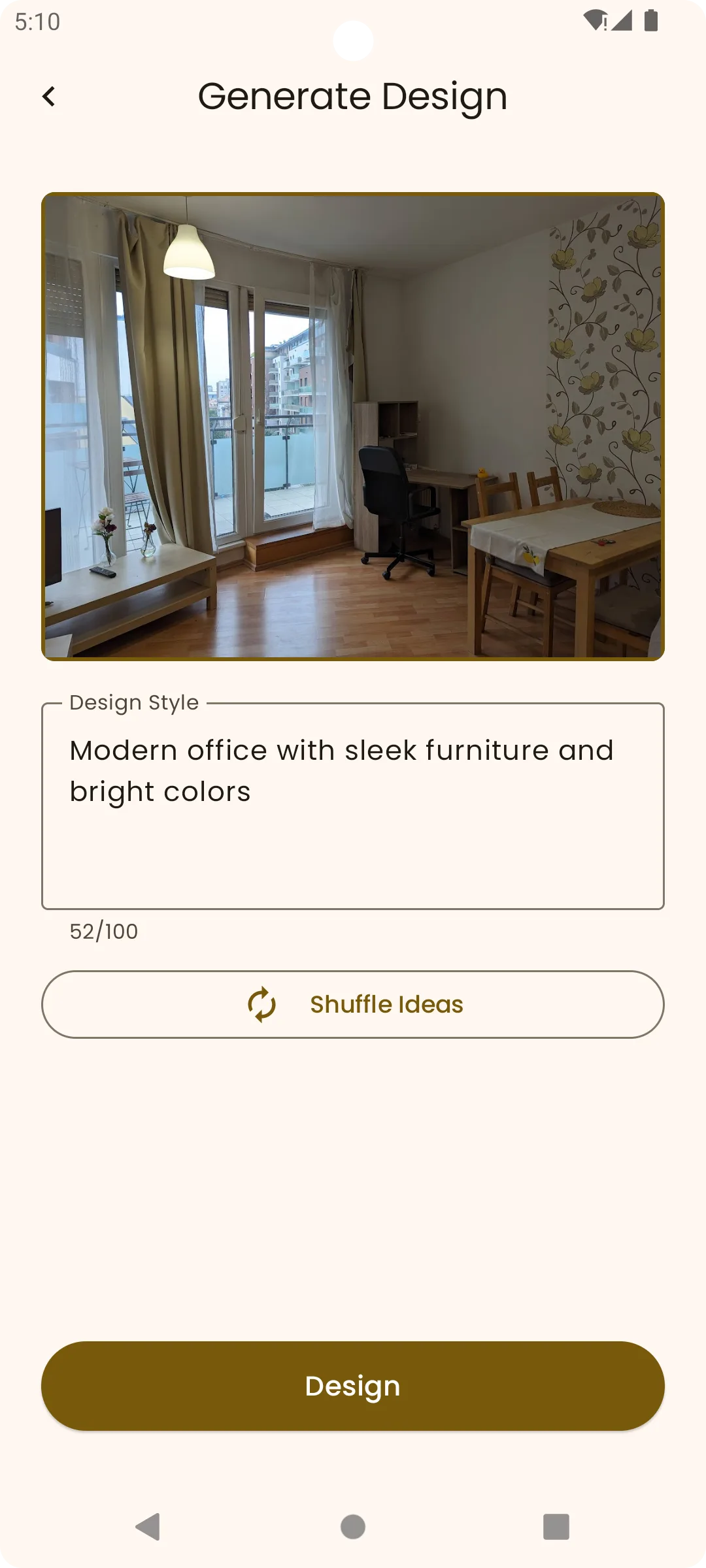
A gorgeous photo of a stranger's living room only tells you so much. The real question is whether a style works in your room, with your light, your layout, and your windows. That is the gap MINIROOM AI closes: you can try a whole style on your actual space before you spend anything, straight from your phone with the app on Google Play.
- Photograph the room. Stand back and capture as much of the space as you can in good daylight. A clear, wide shot gives the AI the most to work with.
- Prompt the style. Name the style you want to test (minimalist, Scandinavian, maximalist, or a mid-century look) as precisely as you can. The sharper your name, the sharper the result, which is exactly why the steps above matter.
- Generate the redesign. The app reimagines your real room in that style, keeping your actual walls, windows, and proportions so you see your space, not a showroom.
- Compare side by side. View the redesign against your original to judge whether the style genuinely suits the room or just looked good in the abstract.
- Save the winners. Keep the versions you like, test a few styles against each other, and use the favorite as your shopping brief.
Trying several styles this way costs nothing but a few minutes, and it turns a guess into a decision you can act on with confidence.
See your style on your own room.
Open MINIROOM AI on Google Play and try your style on a real photo.

Frequently asked questions
How do I find my interior design style?
Save ten to fifteen rooms you love and look for the pattern, then read the pieces you already own and love for the same clues. Next, decide how you want the room to feel and weigh that against your light and your lifestyle. Your style sits where your taste, your favorite pieces, your target feeling, and your real space all overlap. A fast way to confirm a candidate is to test it on a photo of your room with MINIROOM AI before you buy anything.
Why does naming my interior design style matter?
A named style works as a filter. It makes shopping faster because you can reject anything off-brief in seconds, it keeps the room coherent because every piece answers to the same look, and it saves money by cutting wrong buys and returns. It also gives you the words to describe what you want to a partner, a contractor, or a design tool, instead of pointing and hoping.
What if I like more than one style?
That usually means you are a blend, which is completely normal and how most good homes are put together. Pick one lead style for about seventy percent of the room, hold every style to a shared palette, and repeat a material or metal finish so the pieces feel related. Keep it to two or three styles so the room stays coherent rather than busy.
Are online interior design style quizzes accurate?
They can be a fun nudge, but they often miss the two things that decide whether a style actually works: your room's light and how you really live in it. A more reliable method is to study the rooms and pieces you already love for patterns, then test a candidate style on a photo of your actual space. Seeing it in your own room beats answering questions about hypotheticals.
How is minimalist different from Scandinavian?
Both are calm and pared back, but the feeling differs. Minimalist treats empty space as a feature and keeps surfaces and color to the bare essentials. Scandinavian shares that restraint but adds warmth through pale wood and soft textiles, so it reads cozy rather than stark. If you want near-nothing, lean minimalist; if you want light and a little softness, lean Scandinavian.
Do I have to follow one style exactly?
No. A style is a starting point, not a rulebook. Use it as a filter to keep your choices coherent, then bend it to fit your space, your budget, and the things you already own and love. A room that pairs a lead style with a couple of personal accents almost always feels more like home than a strict, by-the-book copy.
How can I see my style in my own room before buying furniture?
Photograph your room in good daylight, then use MINIROOM AI to redesign that exact space in the style you are considering. Because the app works from your real walls, windows, and layout, you see how the style behaves in your room rather than in a showroom. Compare the result against your original, save the versions you like, and use the favorite as a shopping brief. The app is available on Google Play.
Where can I compare all the interior design styles?
Start with the interior design styles hub, which lays out every named style in one place so you can spot the family you belong to and open the ones that fit. From there, the individual guides for minimalist, Scandinavian, and maximalist go deeper on palette, materials, and the feeling each one creates, so you can narrow a broad sense of taste down to a couple of named candidates.